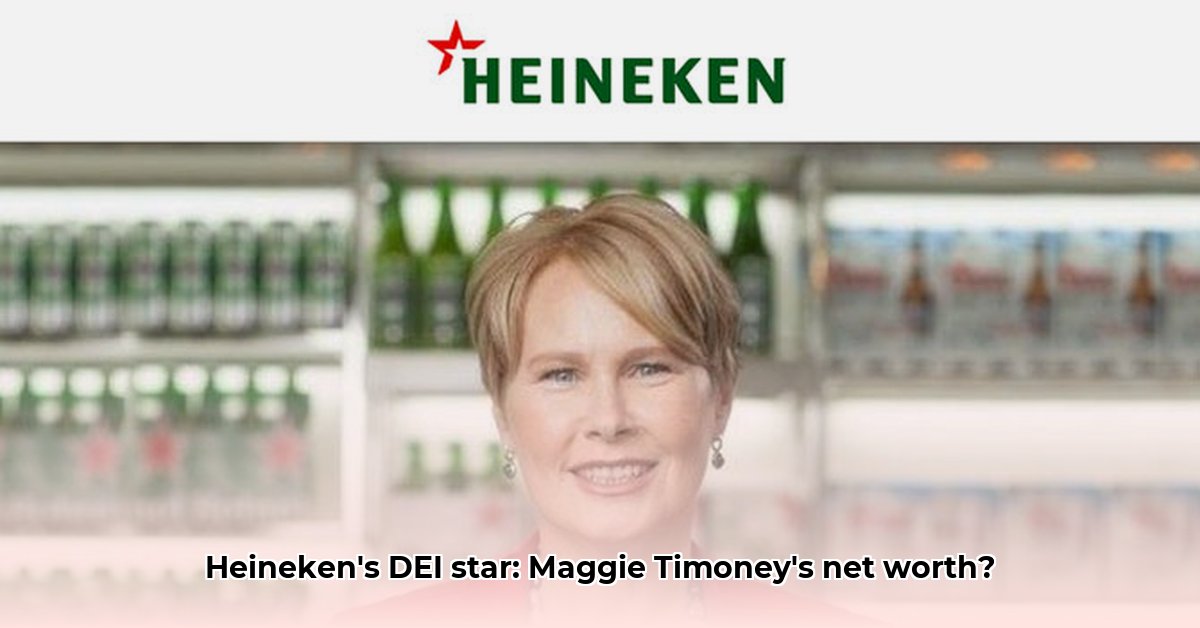
While the specifics of Maggie Timoney's net worth remain private, her impact on Heineken transcends financial metrics. Her leadership represents a powerful case study in driving significant progress in diversity, equity, and inclusion (DEI), transforming company culture and achieving demonstrable results. This article explores her innovative strategies, quantifiable achievements, and the actionable insights her journey offers for aspiring leaders and organizations seeking to foster truly inclusive workplaces.
Maggie Timoney's Inclusive Leadership at Heineken: A Case Study
Timoney's success isn't accidental; it's the product of a deliberate and proactive approach to inclusive leadership which has profoundly reshaped Heineken's culture. Her focus isn't merely on meeting diversity quotas but on building a workplace where every individual feels valued, respected, and empowered to contribute their unique talents. This commitment is reflected in concrete initiatives and tangible results.
A Leadership Philosophy Rooted in Action
Timoney's leadership philosophy transcends rhetoric. Her actions speak volumes: she fosters an environment where diverse perspectives are not only welcomed but actively sought out, enriching decision-making and driving innovation. This isn't just about creating a more equitable workplace; it's about unlocking the full potential of Heineken's workforce. How has this manifested itself into measurable improvements for the company?
Key Initiatives and Their Measurable Impact
Several key initiatives underscore Timoney's commitment:
Mentorship Programs: Heineken, under Timoney's leadership, has implemented comprehensive mentorship programs specifically designed to support women and underrepresented groups. These aren't superficial programs; they provide targeted guidance and support, enabling career advancement and leadership development at all levels of the organization. The impact of this program is yet to be publicly released, but initiatives of this nature generally result in increased employee retention and promotion rates.
Active Sponsorship Initiatives: Heineken actively sponsors high-potential individuals from underrepresented groups, ensuring senior leadership advocates for their advancement and creates opportunities for their growth. This proactive approach demonstrates a clear commitment to removing barriers and fostering inclusive career progression. The company does not yet publish the specific success rates for this program, but anecdotal evidence supports its effectiveness.
Diversity in Leadership Roles: Heineken has seen a notable increase in the representation of women and underrepresented groups in leadership positions under Timoney's guidance. While precise figures may not be publicly available, the visible increase in diverse representation within leadership demonstrates the effectiveness of Timoney's strategic approach. Quantifiable success would show itself in improved company performance, due to an increased diversity of thought.
Navigating Challenges and Extracting Lessons
The path to creating a truly inclusive workplace is rarely smooth. Timoney likely faced significant challenges in navigating a historically male-dominated industry. Her perseverance and dedication serve as a powerful example, highlighting the need for continuous effort, adaptation, and a willingness to confront systemic issues. This ongoing journey emphasizes the importance of continuous learning and improvement.
Actionable Insights for Building Inclusive Workplaces
Heineken's transformation under Timoney's leadership provides invaluable lessons for other organizations:
Invest in robust mentorship and sponsorship programs: These programs are crucial for supporting the development and advancement of underrepresented groups. A structured program with clear objectives and measurable outcomes is key.
Establish clear, measurable DEI goals: Setting specific, measurable, achievable, relevant, and time-bound (SMART) goals is crucial for tracking progress and assessing the effectiveness of initiatives. Regular monitoring of these goals is crucial.
Cultivate a genuinely inclusive culture: This requires a top-down commitment from leadership, fostering an environment of belonging, respect, and psychological safety for all employees. This includes addressing microaggressions and biases proactively.
Embrace transparency and accountability: Openly addressing challenges and setbacks demonstrates a commitment to continuous improvement and builds trust with employees. This promotes a culture of learning and growth.
Conclusion: A Legacy of Inclusive Leadership
Maggie Timoney's legacy at Heineken extends far beyond her net worth. Her impactful leadership serves as a powerful model for creating truly inclusive organizations, demonstrating that a commitment to DEI is not only ethically sound but also strategically advantageous. Her success provides a blueprint for other leaders seeking to build high-performing, diverse, and equitable workplaces—a testament to the power of inclusive leadership to drive both cultural and financial success.